

Waking tired after enough hours of sleep can signal more than a busy week. Broken sleep can ripple into cravings, mood changes, slow recovery, and sharper menopause symptoms. National Wellness Group evaluates recurring sleep patterns alongside hormone and metabolic concerns, so symptoms are interpreted in context.
Quick answer: At National Wellness Group, sleep and hormone balance are evaluated together because restorative sleep helps coordinate cortisol, insulin, appetite hormones, growth hormone, and the body clock. Poor or fragmented sleep can raise evening cortisol and reduce insulin sensitivity, making appetite, energy, and weight regulation harder to steady. It can also weaken recovery and worsen irritability, brain fog, or hot-flash disruption during the menopause transition, when healthy aging and daily resilience matter most. A scientific review links sleep with neuroendocrine function and glucose metabolism, showing why a sleep pattern deserves attention when symptoms cluster. Supportive care starts by identifying poor sleep, hormone shifts, stress load, and metabolic signals together rather than treating each persistent symptom alone.
If you are asking whether nights can be driving fatigue, cravings, low mood, slower recovery, or worsening hot flashes, the answer begins with physiology, not blame. The connection begins with the body’s nightly reset.
Sleep and hormone balance: the nightly reset
Answer capsule: National Wellness Group views sleep and hormone balance through timing, symptoms, and overall health context. Restful sleep supports the usual release pattern of cortisol and growth hormone. When poor sleep becomes a pattern, signals tied to stress, appetite, and blood sugar may also shift. The goal is not to judge one restless night, but to notice a pattern worth discussing.
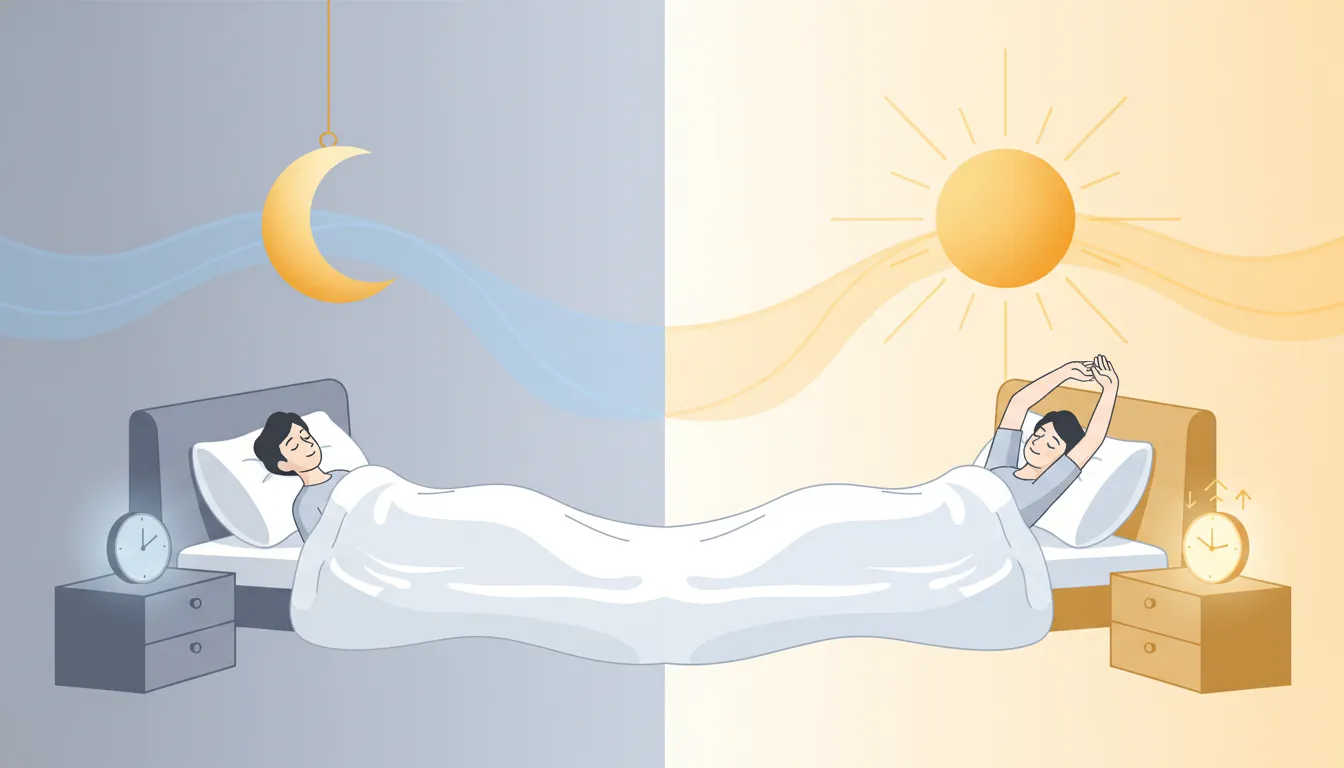
Sleep architecture and hormone timing
Sleep is not a single resting state. It moves through non-REM and REM stages in an organized pattern called sleep architecture. That pattern matters because hormone release is linked with sleep timing, duration, and quality.
Deep, slow-wave sleep is a key part of that pattern. Growth hormone rises during slow-wave sleep and peaks soon after sleep begins. This timing is described in a review of sleep and hormone secretion. Short or broken sleep can disrupt the usual nightly rhythm.
Circadian rhythm and cortisol
Your circadian rhythm helps organize sleep and wake timing across the day. Sleep quality also affects the stress-response system that regulates cortisol. In an NCBI review of sleep and endocrine function, sleep restriction increased activity in that system.
Sleep loss may affect more than cortisol. Research also links sleep restriction with lower leptin, higher ghrelin, more hunger, and lower insulin sensitivity. These shifts can help explain why poor sleep may be felt in appetite, energy, and daily stress.
How to track your nightly pattern
Start with a steady sleep window when your schedule allows. For two weeks, record bedtimes, wake times, night waking, morning energy, and any symptoms that disturb sleep. A simple log can help show whether concerns follow irregular timing or broken sleep.
Bring those notes to a clinician if sleep disruption occurs with hot flashes, fatigue, mood changes, or other hormone concerns. National Wellness Group’s integrative functional medicine approach places sleep patterns in the broader context of stress, metabolism, and hormone health.
How does poor sleep disrupt cortisol and metabolism?
Cortisol timing and the stress response
Poor sleep can shift the normal cortisol rhythm, leaving the stress response more active in the evening. Cortisol is not simply harmful; its timing matters for waking alertness and nighttime rest. Research links sleep restriction with higher evening cortisol and reduced insulin sensitivity, both central to sleep and hormone balance.
A restless night does not prove a cortisol disorder. Yet repeated trouble falling asleep, waking wired, or feeling drained during the day may deserve a closer look. The pattern matters because a body that cannot settle at night may struggle to restore steady daytime energy.
It also helps to separate a stress response from a diagnosis. The impact of cortisol on sleep quality can be considered alongside symptoms, history, and testing when needed.
Restorative sleep versus fragmented sleep
Sleep is part of metabolic control, not just recovery time. When sleep becomes broken or short, hunger signals and blood sugar responses may change together. This overlap can help explain why cravings, energy dips, and weight concerns often cluster during poor sleep periods.
| Body process | Restorative sleep | Fragmented sleep |
|---|---|---|
| Cortisol pattern. | Supports a steadier daily rhythm. | May raise evening cortisol activity. |
| Appetite cues. | Supports clearer hunger cues. | May increase hunger and cravings. |
| Insulin response. | Supports glucose handling. | May reduce insulin sensitivity. |
| Daily energy. | More stable fuel use. | More dips and rebound snacking. |
These shifts can feed each other. A late energy crash may lead to quick snack choices, while hunger can make rest harder to protect. The table describes patterns that clinicians may explore; it does not show a diagnosis for one person.
Cravings, blood sugar, and evaluation
With restricted sleep, leptin can fall while ghrelin and hunger rise. The body may also handle glucose less smoothly when insulin sensitivity drops. A craving or weight change can have many causes. Nutrition, stress, medicines, and health conditions can also play a role.
Track sleep quality with energy, cravings, meals, and changes in weight or mood. This record can help a clinician assess sleep disruption, glucose concerns, cortisol rhythm, or another cause. A personalized performance and endurance program can consider sleep, recovery, and metabolic goals as related parts of care.
Thyroid signals, mood, and daytime energy
Fatigue, low mood, brain fog, and feeling too warm or cold can leave you asking where to start. These concerns may appear with broken sleep, a thyroid concern, or more than one factor at once. The link between sleep and hormone balance deserves attention, but poor sleep alone does not prove thyroid disease.
Symptoms that need context
When nights are restless, daytime energy and focus may slip. Low mood, slow thinking, and changes in heat or cold comfort can also prompt questions about thyroid health. Those shared signs matter because symptoms are clues, not a diagnosis.
A careful visit looks for patterns rather than assigning every concern to one cause. Sleep plays a role in neuroendocrine function and glucose metabolism. This role is described in a review in the NCBI research archive. Sleep history helps when a clinician reviews energy, stress, and metabolic concerns. It does not show that sleep loss created a thyroid disorder.
What sleep can and cannot explain
If fatigue began after schedule changes, hot flashes, stress, or repeated waking, sleep may be part of the picture. If symptoms persist despite better rest, they warrant clinical review. Reading about the impact of cortisol on sleep quality can help you note patterns before an appointment.
The aim is not to choose between sleep and thyroid as competing answers. Ask how sleep, mood, energy, temperature comfort, stress, and other symptoms fit together. This balanced view keeps the conversation specific without overstating what sleep can explain.
A careful functional evaluation
At National Wellness Group, a functional care discussion may begin with your sleep pattern, symptom timeline, health history, and current care. A clinician can decide whether further review of thyroid or other contributors is appropriate. An integrative functional medicine visit can connect those details to a personal care plan.
Before a visit, track bedtime, waking, daytime dips, mood changes, and temperature sensitivity. Also list medicines or supplements and any past thyroid concerns. These details help your clinician discuss next steps, including sleep support or testing when indicated.
Why can perimenopause and menopause make sleep harder?
A changing sleep pattern
During perimenopause and menopause, sleep can feel less steady than it once did. A night sweat may interrupt rest, or you may wake and struggle to settle again. These changes are not a personal failure. They can be part of a hormone shift that also affects mood and daily comfort.
Sleep and hormone balance influence each other. Research on aging and sleep notes that disrupted sleep and body clock changes can affect hormone signals during menopause. For more on this life stage, read about managing sleep during perimenopause.
The stress and waking loop
A difficult night can shape the next day. You may feel tired, tense, or less able to handle normal demands. Worry about another poor night can then make bedtime feel stressful, even before symptoms appear.
This loop has a clear link to the body’s stress response. The HPA axis helps manage cortisol. Its activity rises with sleep restriction, according to the National Center for Biotechnology Information. This does not mean every bad night causes a disorder. It helps explain why repeat waking and daytime stress may build on each other.
Symptoms that add to the burden
Sleep disruption does not happen alone. Nighttime heat, mood shifts, mental strain, and fatigue can overlap. When several symptoms occur together, even simple routines may take more effort. Tracking when you wake and what you notice can help clarify the pattern for a care visit.
A care plan may consider symptoms, sleep habits, health history, and goals, not one concern alone. National Wellness Group’s Ageless Harmony Program takes a whole-person view of healthy aging and hormone concerns. Support can begin with a close look at how sleep changes affect your daily life.
Explore individualized healthy aging and hormone support through the Ageless Harmony Program.
Deep sleep, recovery, and healthy aging
Sleep and hormone balance are closely tied to recovery, but sleep is not a way to reverse age. A restful night supports normal overnight signals and gives you a clearer view of next-day energy. It belongs in a long-term plan with movement, nutrition, medical history, and lab findings when appropriate.
Deep sleep and recovery signals
During slow-wave sleep, also called deep sleep, growth hormone levels rise compared with lighter sleep and REM sleep. Levels also peak soon after sleep starts, according to a review of sleep and endocrine function. This pattern matters when a clinician reviews poor recovery or changing hormone symptoms.
Deep sleep should not be framed as a way to reverse age. It is a recovery window that helps place tissue repair, soreness, and exercise progress in clinical context. For active adults, our performance and endurance program considers sleep with recovery, energy, and hormone goals. A slower recovery pattern may call for more rest, a changed training load, or further evaluation.
Readiness after a poor night
A tired morning can be useful information, but it does not diagnose a hormone problem. Watch for patterns, such as poor sleep paired with slow recovery, lower training tolerance, or trouble staying alert. Tracking these patterns over time can help separate a brief setback from an issue worth discussing.
Cognitive readiness matters in the same way. If your attention drops after a poor night, hard training or complex work may feel less manageable. A simple sleep and symptom log can show whether this pattern repeats. Bring that record to a visit instead of guessing from a single difficult day.
Sleep in a healthy aging plan
Aging changes the questions people bring to care. They may notice interrupted sleep, longer recovery, or reduced exercise confidence. None of these concerns proves that aging has accelerated. They do offer a reason to assess habits, symptoms, medications, and health history together.
A longevity specialist can place sleep in a broader plan for ongoing health. That plan may include recovery goals, daily routines, and testing when needed. Sleep is a foundation for planning, not proof of an anti-aging effect.
Seek care when sleep trouble continues, limits daily life, or appears with symptoms that worry you. The useful goal is not perfect sleep every night. It is a clear, personal plan for recovery and healthy function over time.
What helps restore sleep and hormone balance?
Sleep and hormone balance are shaped by daily patterns, not one perfect night. A steady routine can make sleep easier to track and discuss with a clinician. Sleep also has a close link with endocrine function. A review in the NCBI Bookshelf notes that sleep restriction increases activity in the HPA axis, a key stress-response system.
A steady daily rhythm
The goal is not a rigid schedule or a promise of symptom relief. It is a set of repeatable habits that can reduce guesswork. Track how you sleep alongside energy, mood, hot flashes, cravings, or cycle changes. This record can help guide an individual care plan.
Keep wake time steady. Pick a wake time that works on most days, including weekends. Move bedtime earlier in small steps if you are often tired in the morning. Consistency is easier to judge after several weeks than after a single restless night.
Seek light early in the day. Spend time outdoors after waking when it is safe and practical. If outdoor time is limited, sit near bright daylight while you begin your day. In the evening, dim lights and lower screen glare to support a calmer routine.
Build a simple wind-down plan. Give yourself a short transition before bed. Choose quiet actions such as stretching, reading, or preparing items for morning. Avoid turning bedtime into a test that you can pass or fail, since pressure may make rest feel harder.
Notice evening triggers. Write down whether late meals, alcohol, caffeine, intense exercise, or a warm room seem linked with poor rest. Do not change everything at once. Test one adjustment at a time, then note whether sleep, waking, and morning energy shift.
Make room for stress relief. A racing mind can follow you to bed. Try slow breathing, a short journal entry, a gentle walk, or a quiet talk with someone you trust. Choose a method that feels realistic, then practice it before stress peaks.
Ask for evaluation when symptoms persist. Seek medical guidance if poor sleep continues, disrupts daily life, or occurs with troubling symptoms. Mention snoring, waking gasping, severe fatigue, new mood changes, or strong hot flashes. Evaluation can look for sleep disorders and hormone-related concerns.
Patterns worth discussing
Sleep changes may overlap with perimenopause, thyroid concerns, stress, blood sugar changes, or other health needs. If night waking occurs with menstrual or temperature changes, learning about managing sleep during perimenopause can help you prepare questions for a visit. A symptom log keeps that talk focused.
Individualized next steps
Habits are a starting point, not a diagnosis or a guarantee. A clinician may review symptoms, history, medicines, sleep patterns, and lab needs before suggesting next steps. At National Wellness Group, planning can account for life stage, daily demands, and ongoing health concerns. That approach keeps sleep support practical and personal.
When should you discuss sleep and hormones with a clinician?
Patterns worth bringing up
An occasional poor night does not define your health. A repeating pattern deserves attention when sleep disruption occurs with fatigue, hot flashes, night sweats, mood shifts, or slower recovery after exercise. It is also worth discussing when rest no longer leaves you feeling restored.
Keep notes on what is happening and when it occurs. Record bedtime, night waking, cycle or menopause changes, energy, appetite, mood, and exercise recovery. These details can show whether concerns about sleep and hormone balance follow a clear pattern over time.
Seek timely medical attention when symptoms are new, severe, or rapidly worse. Urgent problems, such as chest pain or trouble breathing, need prompt care rather than a wellness visit. For recurring concerns, a focused appointment can help you explain the pattern clearly.
Sleep, hormones, and metabolic concerns
Sleep concerns can matter beyond daytime energy. Research reviews report that sleep plays a major role in neuroendocrine function and glucose metabolism. Sleep restriction is also linked with changes in insulin sensitivity, hunger signals, and evening cortisol. This review of sleep and metabolic function explains why a clinician may ask about sleep with weight or blood sugar concerns.
A conversation may help if disrupted sleep occurs with appetite changes, weight concerns, reduced exercise tolerance, or difficulty recovering. During perimenopause or menopause, sleep problems alongside hot flashes or mood changes can provide useful context. Readers in that transition can learn more about managing sleep during perimenopause.
What a functional visit may cover
A clinician can review the whole pattern rather than label one symptom in isolation. At National Wellness Group, a functional approach may cover health history, sleep habits, stress, nutrition, activity, current medicines, and symptoms. The aim is to understand contributing factors and decide whether further review fits your needs.
Bring a simple symptom log, a current medication and supplement list, and recent test results if available. Note whether symptoms affect work, exercise, concentration, or daily life. This gives Dr. Marina Yuabova, DNP, APRN, useful context for a personal discussion. It does not assume a diagnosis before an evaluation.
National Wellness Group offers care in Boca Raton and by telehealth for people in other locations. If recurring sleep disruption affects daily function or occurs with hormone-related concerns, you can request a consultation to discuss next steps.

A daily rhythm that supports better sleep
Sleep and hormone balance are shaped by patterns, not by one perfect night. A daily rhythm can help you notice which habits support rest and steadier daytime energy. It can also give a clinician useful details if sleep changes occur with hot flashes, mood shifts, appetite changes, or fatigue.
Morning anchors
Start with a wake time that you can keep most days. Note how rested you feel, then seek natural morning light or begin your usual morning routine. The goal is not rigid control. It is to give your sleep-wake pattern a clear starting point and make changes easier to track.
Eat and hydrate in a way that suits your care plan, then record any morning fatigue or unusual hunger. Research shows that sleep plays a role in neuroendocrine function and glucose metabolism. Your notes may help connect sleep concerns with the symptoms you want to discuss at a visit.
Daytime patterns
During the day, track energy dips, stress, caffeine timing, movement, and naps. A short record is enough: time, choice, and how you felt later. This is not a test that you pass or fail. It is a practical way to spot patterns across workdays, weekends, and high-stress periods.
Pay close attention when low energy appears with cravings, irritability, or trouble winding down at night. Sleep restriction has been linked with changes in appetite signals and hunger. If stress and alertness stay high late in the day, reading about the impact of cortisol on sleep quality can add context for your questions.
Try to keep your log simple enough to use for a week or longer. You might record meals, afternoon caffeine, activity, stress, and when you first feel sleepy. Do not judge one difficult day in isolation. A pattern over time gives you clearer information than a single restless night.
Evening cues and visit notes
Build an evening routine from small cues you can repeat, such as dimmer lights, a calmer activity, and a planned bedtime window. Keep screens, late meals, alcohol, exercise, and nighttime waking in your log when they apply. Look for repeated links between these choices and how easily you fall asleep or stay asleep.
Bring your notes to a clinician if poor sleep continues or comes with changing hormone-related symptoms. Include bedtime, waking time, sleep disruptions, morning energy, and any questions about medications or lab work. Sleep timing, duration, and quality are connected with hormone release, as described in a peer-reviewed review of sleep and metabolic function. A clear record can support a more focused conversation.
Frequently Asked Questions
Can lack of sleep cause hormone imbalance?
Yes. Ongoing short or fragmented sleep can disrupt normal hormone timing and regulation. Research reviewed by the National Institutes of Health links sleep restriction with higher evening cortisol, lower leptin, higher ghrelin, and reduced insulin sensitivity. These changes may contribute to greater hunger, stress, and blood sugar difficulty. Persistent symptoms should be reviewed with a qualified health care professional.
How does sleep deprivation affect metabolism?
Sleep deprivation can make metabolic regulation less efficient. It may reduce insulin sensitivity and glucose tolerance, making blood sugar harder to manage. It can also shift leptin and ghrelin levels in ways that increase hunger and appetite. A peer-reviewed review reports these metabolic and endocrine changes with sleep restriction, while noting that long-term risk depends on many factors.
How do fluctuating hormones during menopause affect sleep?
During the menopause transition, changing reproductive hormone patterns may occur alongside hot flashes, night sweats, and interrupted sleep. Repeated awakenings can then worsen fatigue, mood changes, and recovery the next day. An academic review on sleep and aging notes that disrupted sleep and circadian misalignment can complicate menopausal transitions. Persistent symptoms warrant an individualized evaluation rather than relying on sleep tips alone.
Does deep sleep play a role in hormone regulation?
Yes. Deep sleep, also called slow-wave sleep, is an important phase for normal hormone release and physical recovery. According to a sleep and hormone review, growth hormone levels rise during sleep and increase significantly during slow-wave sleep. Poor sleep quality may reduce restorative sleep time, even when someone spends enough total hours in bed.
Can sleep improve hormonal balance?
Healthy sleep can support the body’s normal hormone rhythms, but it is not a stand-alone cure for every imbalance. Regular, restorative sleep supports endocrine and metabolic processes tied to cortisol, appetite, glucose control, and recovery. A review on sleep, endocrine health, and healthy aging describes sleep as an influence on health and longevity through metabolic and hormonal systems.
Choose a practical next step when poor sleep keeps affecting daily life.
Ready to build a healthier sleep plan now?
Waiting while restless nights continue can leave you managing tired mornings, shifting moods, and wellness concerns without a clear path toward lasting daily changes. Starting now gives you time to notice patterns, set practical goals, and build supportive routines before another month passes with the same unanswered concerns. A personalized conversation can organize your priorities, connect them to your goals, and define next steps that feel realistic for your schedule and preferences.
Ready to start with guidance built around your sleep concerns, daily demands, health goals, and clear questions about the months ahead? Schedule a personalized consultation to discuss a practical, individualized approach and choose your next step with National Wellness Group.