
For many men, the signs creep in gradually: persistent fatigue that sleep doesn’t fix, a shorter temper, stubborn weight around the midsection, or a declining interest in activities that once brought energy and joy. These aren’t simply consequences of getting older. They’re often signals of a deeper hormonal imbalance that conventional medicine frequently overlooks. Men’s hormone health is a complex system involving far more than just testosterone, and understanding the full picture is the first step toward reclaiming your vitality. A functional medicine approach identifies and addresses the root causes of these imbalances rather than simply prescribing a one-size-fits-all solution.
Key Takeaways
- Men’s hormone health involves multiple systems: Testosterone, adrenal hormones, and thyroid function all work together. An imbalance in one area often triggers issues in others, making a comprehensive evaluation essential for effective care.
- Functional medicine uncovers the root cause: Rather than simply supplementing a single hormone, a functional medicine approach to men’s health investigates why hormones are out of balance in the first place, using advanced lab testing and a personalized care plan.
- Lifestyle is a powerful lever: Nutrition, sleep quality, stress management, and targeted exercise can profoundly influence hormone levels. These foundational changes often produce significant improvement, sometimes before any supplementation is needed.
Understanding the Male Hormone System
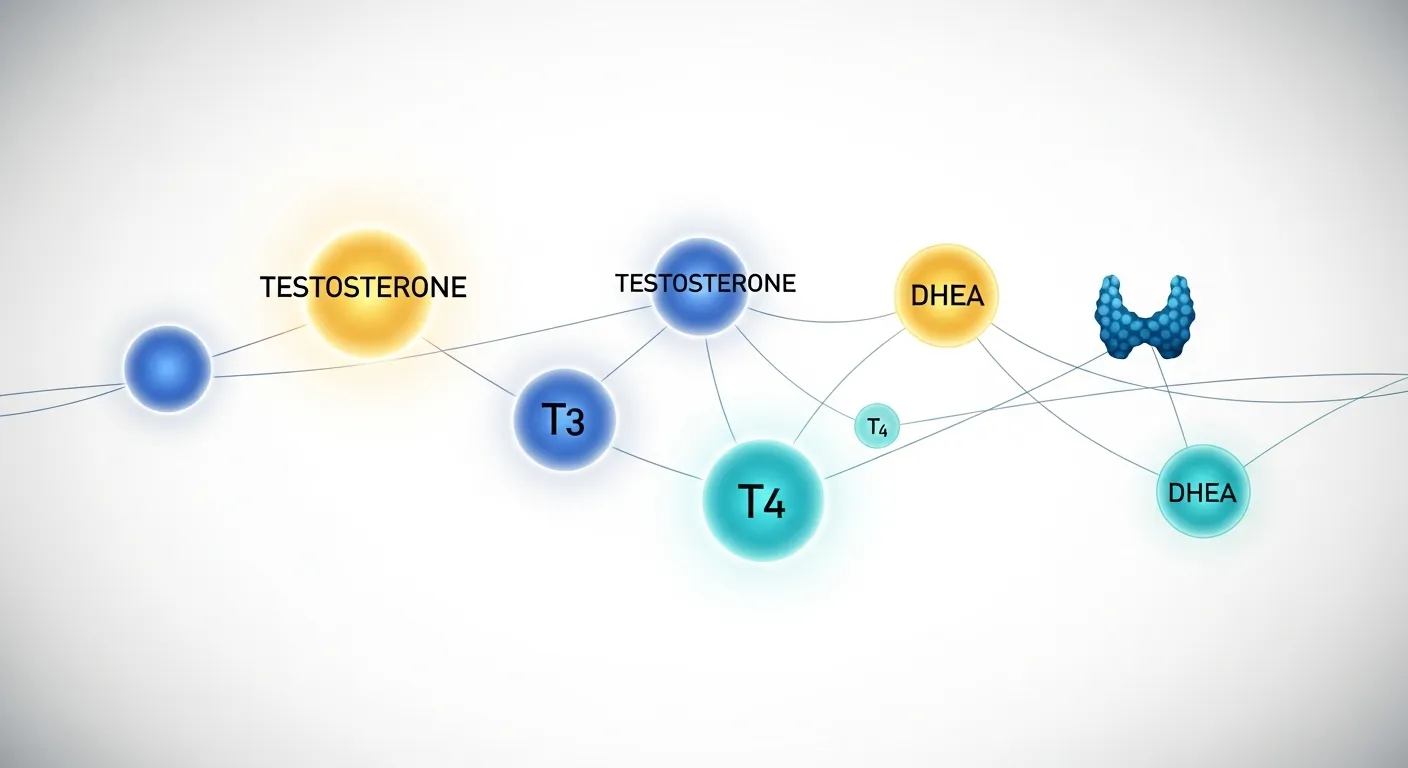
When most people think about men’s hormone health, testosterone is the first thing that comes to mind, and for good reason. It plays a critical role in muscle mass, bone density, mood regulation, cognitive function, and sexual health. But testosterone doesn’t operate in isolation. It’s part of a sophisticated network of hormones that includes cortisol from the adrenal glands, thyroid hormones that regulate metabolism, insulin that controls blood sugar, and DHEA, a precursor hormone that supports multiple systems throughout the body.
In functional medicine, we look at this network as an interconnected ecosystem. When one hormone falls out of its optimal range, it creates a ripple effect. For example, chronically elevated cortisol from ongoing stress can suppress testosterone production. An underperforming thyroid can mimic symptoms of low testosterone, such as fatigue, weight gain, and brain fog. This is why addressing men’s hormone health effectively requires looking at the entire hormonal landscape, not just a single lab value.
Recognizing the Symptoms of Hormone Imbalance in Men
Hormonal imbalances in men can present in ways that are easy to dismiss or attribute to aging, work stress, or lifestyle. But if you’re experiencing several of the following symptoms, your hormones may need attention:
Physical Symptoms
- Persistent fatigue and low energy despite adequate sleep
- Unexplained weight gain, especially around the abdomen
- Loss of muscle mass or difficulty building muscle
- Decreased libido and sexual performance concerns
- Hair thinning or loss
- Sleep disturbances or insomnia
- Joint pain and reduced recovery from exercise
Cognitive and Emotional Symptoms
- Brain fog, difficulty concentrating, or memory lapses
- Irritability, mood swings, or increased anxiety
- Feeling unmotivated or losing interest in previously enjoyed activities
- Depression or a persistent low mood
Metabolic Symptoms
- Elevated blood sugar or insulin resistance
- High cholesterol despite a healthy diet
- Increased belly fat even with regular exercise
- Feeling cold or having cold hands and feet (a potential thyroid indicator)
These symptoms don’t just appear overnight. They build over months or years, and by the time a man seeks help, multiple hormonal systems may be involved. This is precisely why a comprehensive functional approach is so valuable.
Testosterone Optimization Through Functional Medicine
Testosterone levels in men begin a gradual decline around age 30, dropping approximately 1-2% per year. By the time many men reach their 40s and 50s, the cumulative effect can be significant. But age-related decline is only part of the story. Environmental toxins, chronic stress, poor sleep, nutrient deficiencies, gut dysfunction, and excess body fat all accelerate testosterone decline far beyond what’s natural.
A functional medicine approach to testosterone optimization starts with a thorough evaluation. This goes beyond a basic total testosterone test to include:
- Free testosterone: The bioavailable form that your body can actually use
- Sex hormone-binding globulin (SHBG): A protein that binds testosterone, making it unavailable to tissues
- Estradiol (E2): Excess estrogen in men can suppress testosterone and cause symptoms like water retention and mood changes
- DHEA-S: A precursor hormone that supports testosterone production
- Prolactin and LH/FSH: To evaluate the signaling between the brain and testes
Once the full picture is clear, a personalized plan is built. This may include targeted nutritional support (zinc, magnesium, vitamin D, and B vitamins are common deficiencies that impair testosterone production), lifestyle modifications, stress reduction protocols, and when appropriate, bioidentical hormone support. The goal is always to restore the body’s own production capacity first, using supplementation as a complement rather than a replacement. For men interested in how specific peptides can support testosterone, muscle growth, and recovery, our guide to peptides for athletic performance covers the most effective options.
Adrenal Health: The Overlooked Factor in Men’s Hormones
The adrenal glands produce cortisol, DHEA, and small amounts of sex hormones. They are your body’s primary stress-response system, and they have a direct impact on testosterone levels, energy, sleep quality, and immune function. When the adrenals are overtaxed, whether from work pressure, sleep deprivation, over-exercising, or chronic inflammation, the body prioritizes cortisol production over testosterone.
This dynamic, sometimes called the “cortisol steal” or pregnenolone steal, diverts the raw materials (pregnenolone) that would normally produce testosterone toward cortisol instead. Understanding this hormonal cascade is essential for men exploring therapies like anti-aging peptide therapy, which works to restore cellular signaling and hormonal balance. The result: low testosterone, chronic fatigue, poor recovery from workouts, disrupted sleep, and a weakened immune system, even in men who seem otherwise healthy.
Functional medicine evaluates adrenal health through comprehensive cortisol testing, which measures cortisol at multiple points throughout the day rather than a single snapshot. This reveals whether cortisol follows its natural rhythm (highest in the morning, gradually declining through the day) or whether the pattern has become dysregulated. From there, the care plan may include adaptogenic herbs, targeted nutrients like vitamin C and pantothenic acid, stress management techniques, and adjustments to exercise intensity and timing.
Thyroid Function in Men: More Common Than You Think
Thyroid disorders in men are significantly underdiagnosed. While thyroid conditions are more prevalent in women, men are by no means immune, and the symptoms often overlap with other hormonal issues, making them easy to miss. An underactive thyroid (hypothyroidism) in men can cause fatigue, weight gain, constipation, depression, cold intolerance, and even sexual dysfunction, symptoms that are frequently attributed to low testosterone alone.
A comprehensive thyroid evaluation should include more than just TSH. A full panel looks at:
- TSH: The pituitary signal that tells the thyroid to produce hormones
- Free T4: The storage form of thyroid hormone
- Free T3: The active form that cells use for metabolism
- Reverse T3: An inactive form that can block T3 receptors when elevated
- Thyroid antibodies (TPO and TgAb): To check for autoimmune thyroid conditions like Hashimoto’s
Many men with “normal” TSH levels still have suboptimal thyroid function when the full panel is reviewed. Functional medicine uses narrower optimal ranges rather than just the standard reference range, which means subtle dysfunction can be caught and addressed before it progresses. Addressing thyroid health often has a cascading positive effect on energy, weight management, mood, and overall hormone balance.

How Functional Medicine Differs From Conventional Hormone Replacement
Conventional medicine typically addresses low testosterone with a straightforward approach: if your levels are below a certain threshold, you receive hormone replacement therapy (HRT), usually in the form of injections, gels, or patches. While this can be effective at raising testosterone numbers, it often overlooks several critical factors.
The Conventional Approach
- Focuses primarily on total testosterone levels
- May prescribe HRT based on a single lab value
- Often does not investigate why testosterone is low
- Can suppress the body’s natural testosterone production over time
- Rarely addresses adrenal or thyroid function as contributing factors
- Minimal attention to diet, sleep, toxin exposure, or stress
The Functional Medicine Approach
- Runs comprehensive panels including free testosterone, SHBG, estradiol, DHEA, thyroid, adrenal markers, inflammatory markers, and nutrient levels
- Investigates root causes: Is it stress? Gut dysfunction? Nutrient depletion? Environmental toxin exposure? Insulin resistance?
- Creates a personalized, multi-system care plan
- Prioritizes restoring the body’s natural hormone production
- Uses bioidentical hormones when needed, as part of a broader strategy
- Incorporates lifestyle medicine: nutrition, sleep optimization, stress reduction, and movement
- Monitors and adjusts based on symptoms and lab trends over time
At National Wellness Group, Dr. Marina Yuabova, DNP, takes this comprehensive, root-cause approach. Every patient receives an in-depth evaluation and a personalized therapeutic program designed to work in harmony with the body’s natural healing mechanisms.
Lifestyle Factors That Directly Impact Men’s Hormone Health
No supplement, medication, or therapy can fully compensate for a lifestyle that works against your hormones. These foundational factors have a profound and measurable impact on men’s hormone health:
Sleep
Testosterone production peaks during deep sleep. Studies consistently show that men who sleep fewer than six hours per night have significantly lower testosterone levels than those who sleep seven to nine hours. Quality matters too: sleep apnea, which is common in men and often undiagnosed, can suppress testosterone by disrupting deep sleep stages. Prioritizing sleep hygiene, maintaining a consistent schedule, keeping the room cool and dark, and limiting screen time before bed are essential first steps.
Nutrition
What you eat directly affects your hormone levels. Key nutritional strategies for supporting men’s hormone health include:
- Adequate protein: Essential for hormone synthesis and maintaining muscle mass
- Healthy fats: Cholesterol is the building block of all steroid hormones including testosterone. Include olive oil, avocados, nuts, and fatty fish
- Cruciferous vegetables: Broccoli, cauliflower, and Brussels sprouts support healthy estrogen metabolism
- Minimize processed foods and sugar: These drive insulin resistance, inflammation, and weight gain, all of which lower testosterone
- Key micronutrients: Zinc, magnesium, vitamin D, selenium, and B vitamins are critical for hormone production and are commonly deficient
Exercise
Resistance training and high-intensity interval training (HIIT) have the strongest evidence for boosting testosterone levels. However, excessive endurance exercise (overtraining) can actually lower testosterone and elevate cortisol. The key is finding the right balance: challenging your body enough to stimulate adaptation without pushing into chronic overtraining. For men looking to take a structured approach, National Wellness Group’s performance and endurance program integrates hormone optimization with targeted training protocols.
Stress Management
Chronic psychological stress is one of the most potent testosterone suppressors. It elevates cortisol, disrupts sleep, promotes visceral fat storage, and triggers systemic inflammation. Effective stress management, whether through meditation, breathwork, time in nature, or working with a practitioner, is not optional for men seeking to optimize their hormones. It’s foundational.
Toxin Exposure
Endocrine-disrupting chemicals (EDCs) found in plastics, pesticides, personal care products, and household items can interfere with hormone production and signaling. BPA, phthalates, and certain pesticides have been specifically linked to lower testosterone levels in men. Reducing exposure by choosing clean personal care products, filtering water, eating organic where possible, and avoiding plastic food containers can help protect your hormonal health.
When to Seek Help for Hormone Imbalance
If you’ve been experiencing symptoms like persistent fatigue, unexplained weight changes, low motivation, declining sexual health, or brain fog, and especially if these symptoms have been building over time, it’s worth getting a comprehensive evaluation. Don’t settle for being told that your levels are “normal” based on a single test. Your symptoms matter, and they deserve a thorough investigation.
Dr. Marina Yuabova, DNP, at National Wellness Group in Boca Raton, Florida, specializes in helping men restore hormonal balance through a holistic, functional approach. With advanced lab testing, personalized therapeutic programs, and a focus on root-cause healing, the goal is to help you feel like yourself again, with sustained energy, mental clarity, and long-term wellness. As a longevity specialist, Dr. Yuabova pairs hormone restoration with evidence-based protocols designed to support healthy aging and sustained vitality.
Frequently Asked Questions
What age should men start monitoring their hormone levels?
While testosterone naturally begins declining around age 30, any man experiencing symptoms of hormonal imbalance at any age should consider a comprehensive evaluation. Proactive testing in your 30s can establish baseline levels that make it easier to detect and address changes early.
Can lifestyle changes alone improve testosterone levels?
In many cases, yes. Improving sleep quality, adopting a nutrient-dense diet, incorporating resistance training, managing stress, and reducing toxin exposure can meaningfully raise testosterone levels and improve symptoms. A functional medicine practitioner can help determine whether additional support is needed based on your individual lab results.
How is functional medicine testing different from what my regular doctor orders?
Most conventional hormone panels check total testosterone and TSH only. Functional medicine panels are more comprehensive, evaluating free testosterone, SHBG, estradiol, DHEA, a full thyroid panel, adrenal cortisol patterns, inflammatory markers, and key nutrients. This detailed picture reveals imbalances that standard testing often misses.
Is bioidentical hormone therapy safe for men?
When used appropriately and under careful clinical supervision, bioidentical hormones can be a safe and effective part of a comprehensive care plan. The key difference in functional medicine is that bioidentical hormones are used to complement the body’s natural production, not replace it entirely, and they are always combined with lifestyle and nutritional strategies.
How long does it take to see improvement?
Many men begin noticing improvements in energy, sleep, and mood within the first four to six weeks of starting a comprehensive program. Full hormone optimization typically takes three to six months, as the body’s systems recalibrate. Progress is monitored through regular lab work and ongoing symptom assessment.